
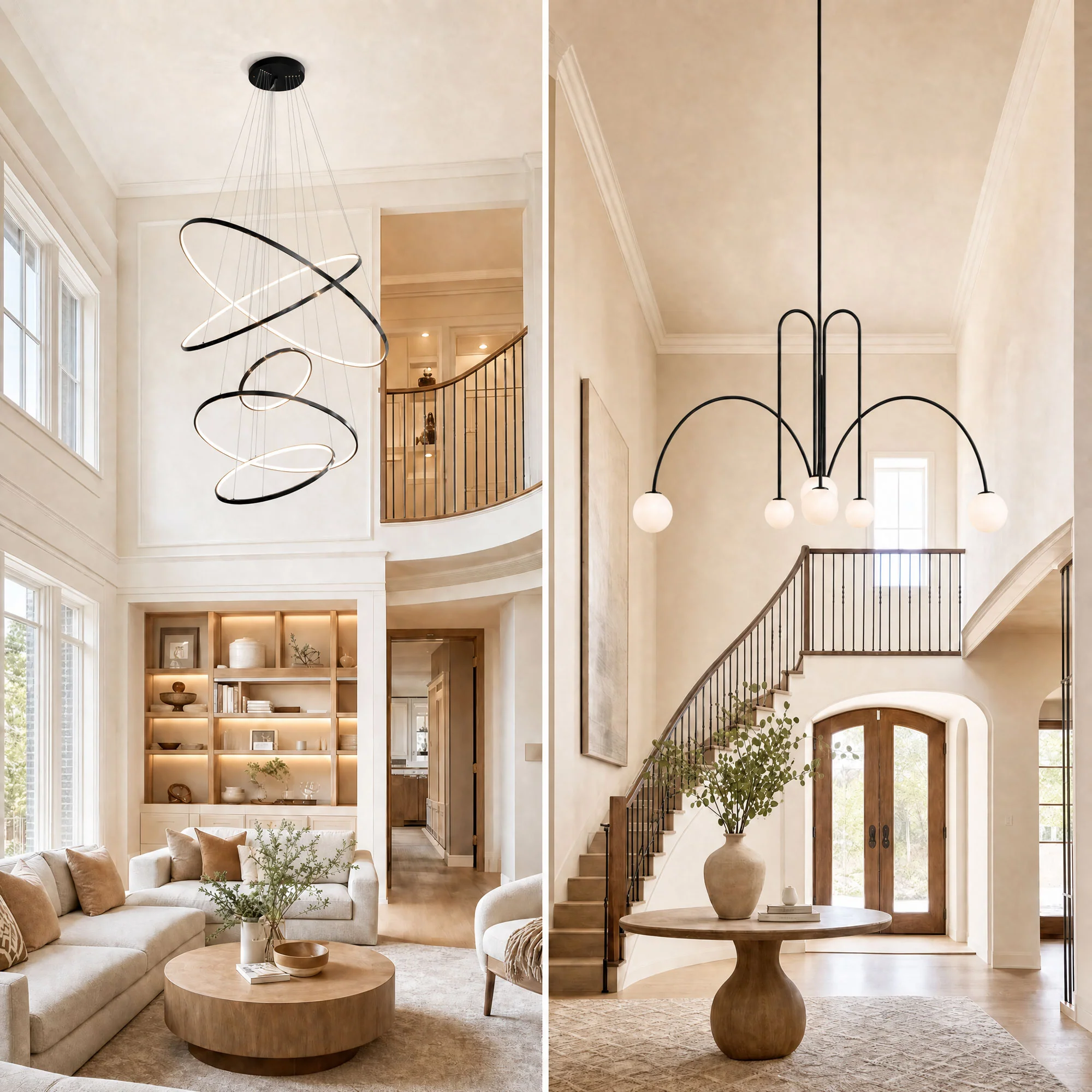
Hi everyone, and welcome to Noolight!
If you are choosing a chandelier for a vaulted living room, two-story foyer, stairwell, or high-ceiling dining room, the light source deserves just as much attention as the size and design of the fixture.
Most chandeliers fall into two main categories: integrated LED chandeliers and chandeliers with replaceable bulbs. One has the LED light source built directly into the fixture, while the other uses bulbs that can be removed and replaced.
In a standard-height room, the difference may not seem especially important. But when a chandelier is installed ten, fifteen, or even twenty feet above the floor, the type of light source can affect maintenance, repairs, dimming, light quality, and long-term ownership costs.
In this Noolight guide, we will compare the two based on maintenance, lighting performance, dimming, repairability, and long-term value, so you can choose the option that makes the most sense for your space.
What Is an Integrated LED Chandelier?
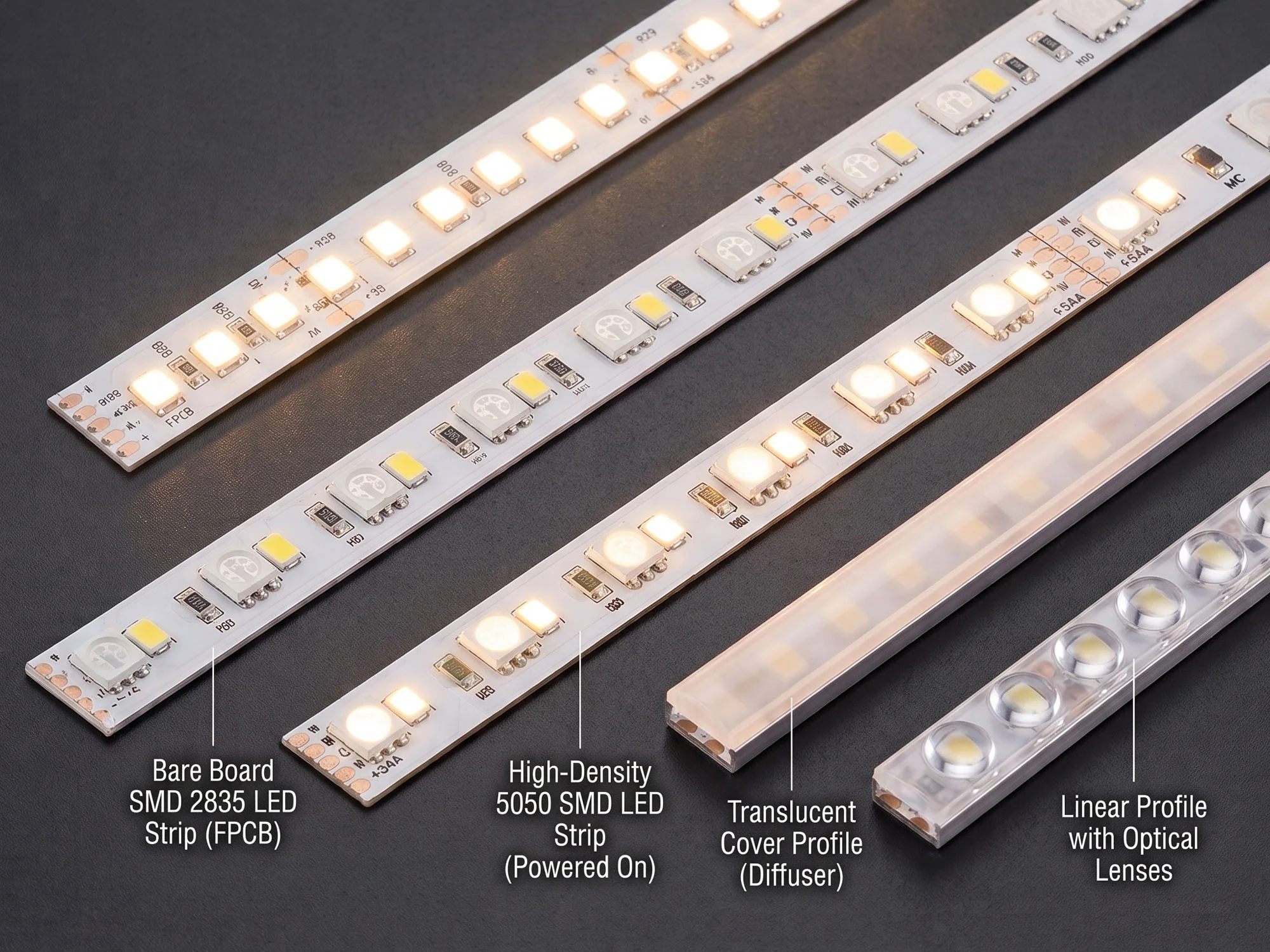
An integrated LED chandelier has the LED light source built directly into the fixture. It does not require separate bulbs to be screwed into sockets.
These chandeliers usually use LED boards, strips, chips, or modules together with a dedicated driver. Because the design does not need to accommodate traditional bulb sockets, the fixture can be slimmer, lighter, and more sculptural.
Common designs include:
- Ring chandeliers
- Linear chandeliers
- Wave-shaped fixtures
- Multi-tier rings
- Ultra-thin suspensions
- Continuous light shapes
This is one reason integrated LED chandeliers are so popular in modern high-ceiling spaces. They can create a strong visual statement without looking heavy.
What Is a Bulb Chandelier?
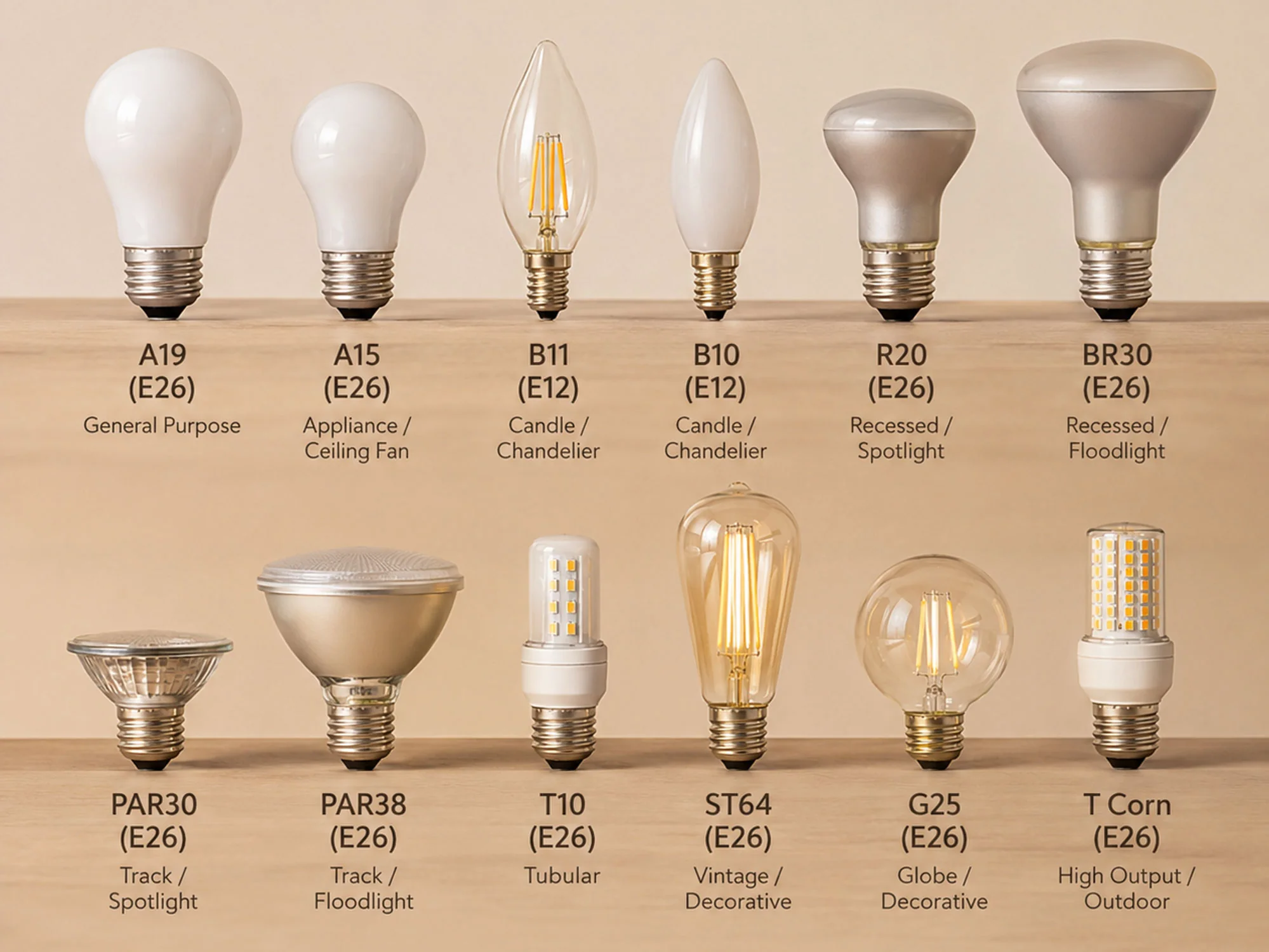
A bulb chandelier uses individual bulbs that can be removed and replaced. In American homes, the most common socket types are E12 candelabra and E26 medium-base.
A bulb chandelier is not automatically less energy-efficient. When used with quality LED bulbs, it can still offer low energy use and long service life.
Commonly found in:
- Crystal chandeliers
- Candle-style designs
- Farmhouse & Alabaster
- Brass multi-arm fixtures
- Glass globe chandeliers
- Traditional branch designs
Their biggest advantage is straightforward maintenance. If one bulb stops working, you can usually replace that bulb without opening the fixture.
Integrated LED vs. Bulb: Quick Comparison
| Feature | Integrated LED Chandelier | Bulb Chandelier |
|---|---|---|
| Light source | Built-in LED system | Replaceable bulbs |
| Routine maintenance | Usually less frequent | Bulbs need periodic replacement |
| Repair process | May require a replacement driver | Usually solved by replacing the bulb |
| Design style | Slim, modern, sculptural | Traditional, decorative, versatile |
| Lighting effect | Continuous and even | Individual points of light |
| Color temperature | Often fixed | Easy to change with new bulbs |
| Smart lighting | Depends on driver system | Often compatible with smart bulbs |
| High-ceiling edge | Fewer routine bulb changes | Easier long-term serviceability |
Maintenance Is the Biggest Concern
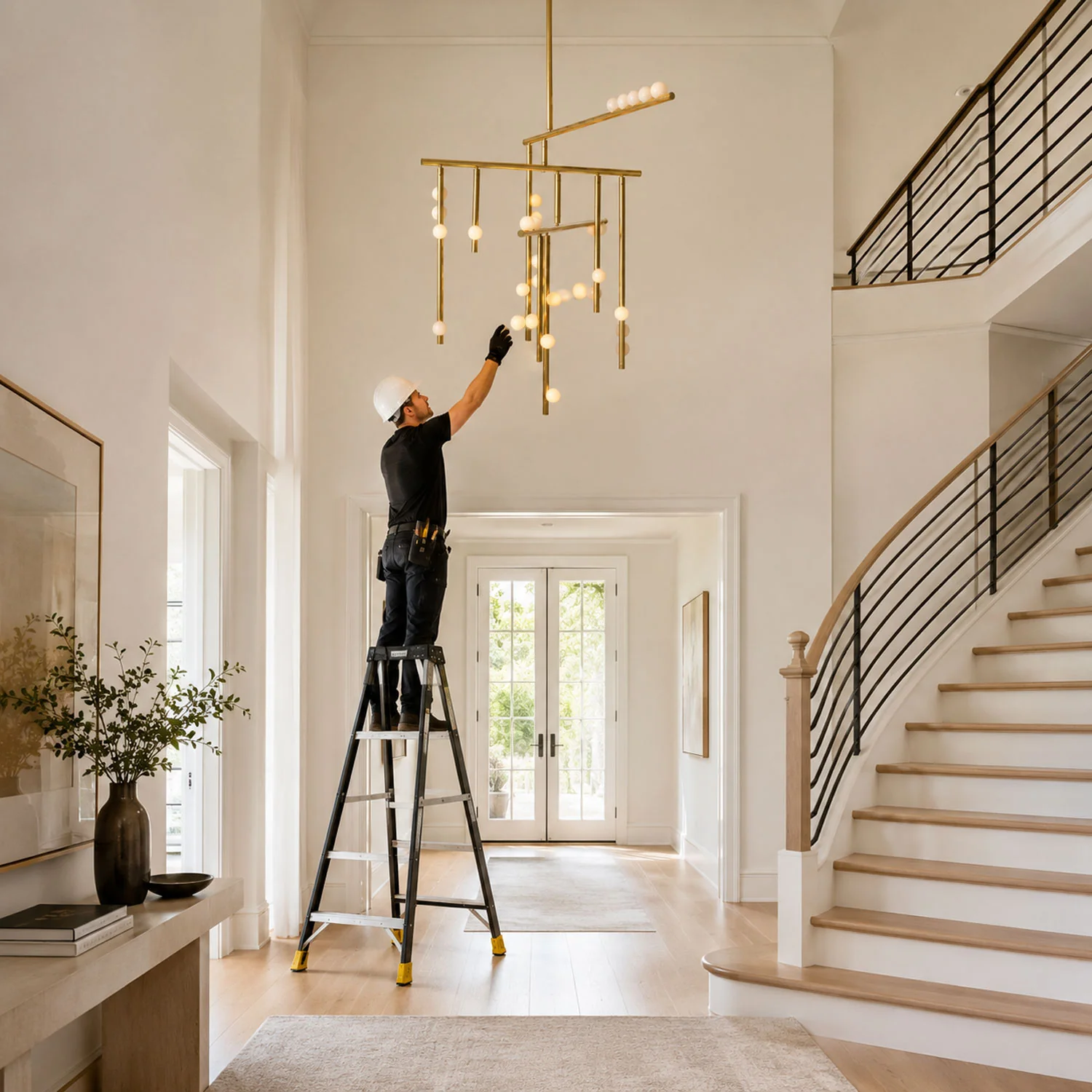
Replacing a bulb in a two-story foyer or vaulted living room may require an extension ladder, indoor scaffolding, a professional installer, or a chandelier lift. This makes a basic bulb change expensive and potentially unsafe.
An integrated LED chandelier usually requires less frequent attention. However, its lifespan depends on driver quality, heat management, and voltage stability.
Before buying, ask:
- Can the driver be replaced?
- Are replacement LED modules available?
- Does the entire chandelier need removal for repair?
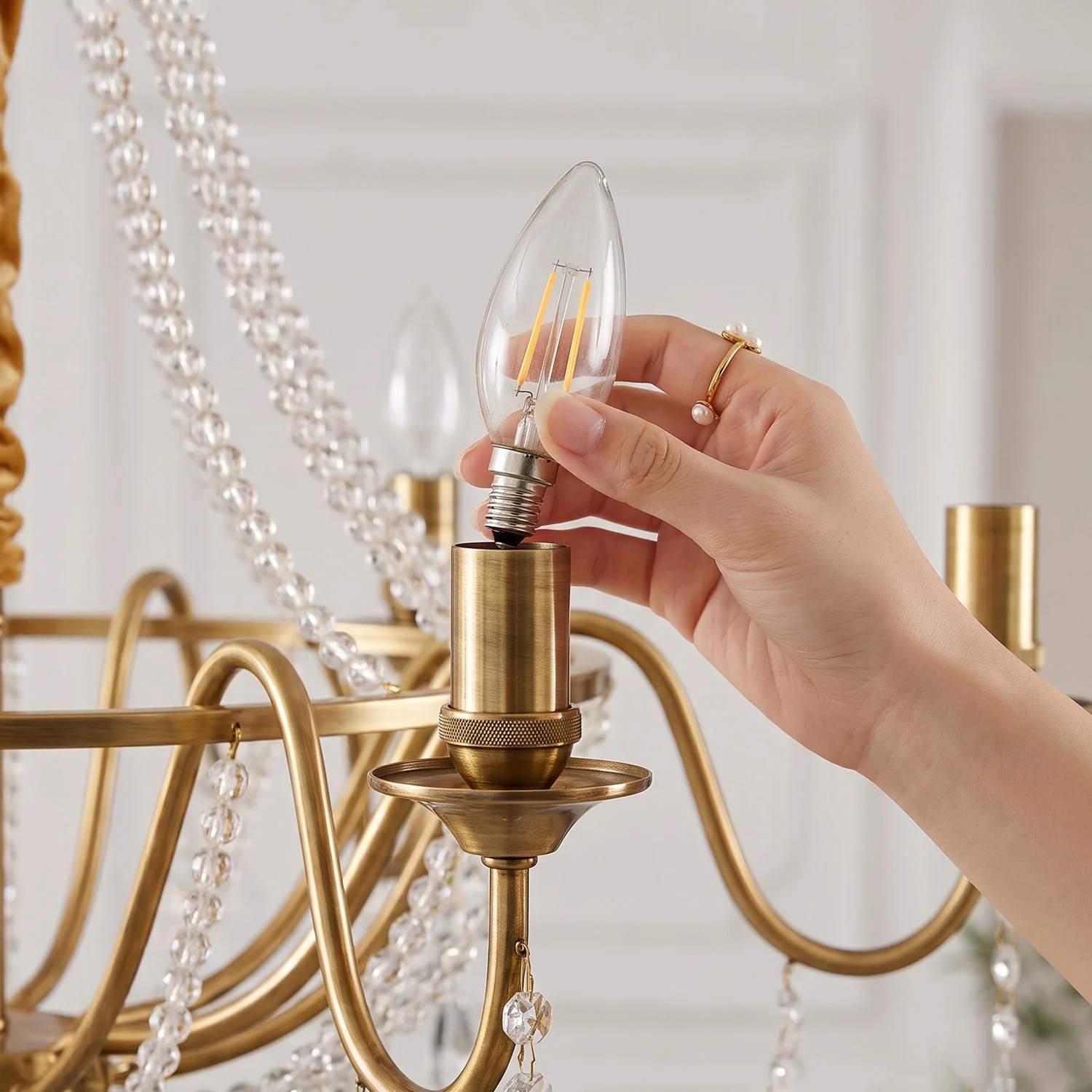
Bulb Chandeliers Offer Flexibility
Bulb chandeliers may need more frequent maintenance, but they are easier to understand and update over time.
If a bulb fails, replace it. If the light feels too cool, switch to a warmer bulb. If the room needs more brightness, use a compatible bulb with a higher lumen output.
You can also upgrade to smart bulbs without replacing the chandelier itself. That makes bulb chandeliers especially useful for traditional or classic interiors where the fixture will remain for many years.
Do Not Choose Based on Wattage Alone
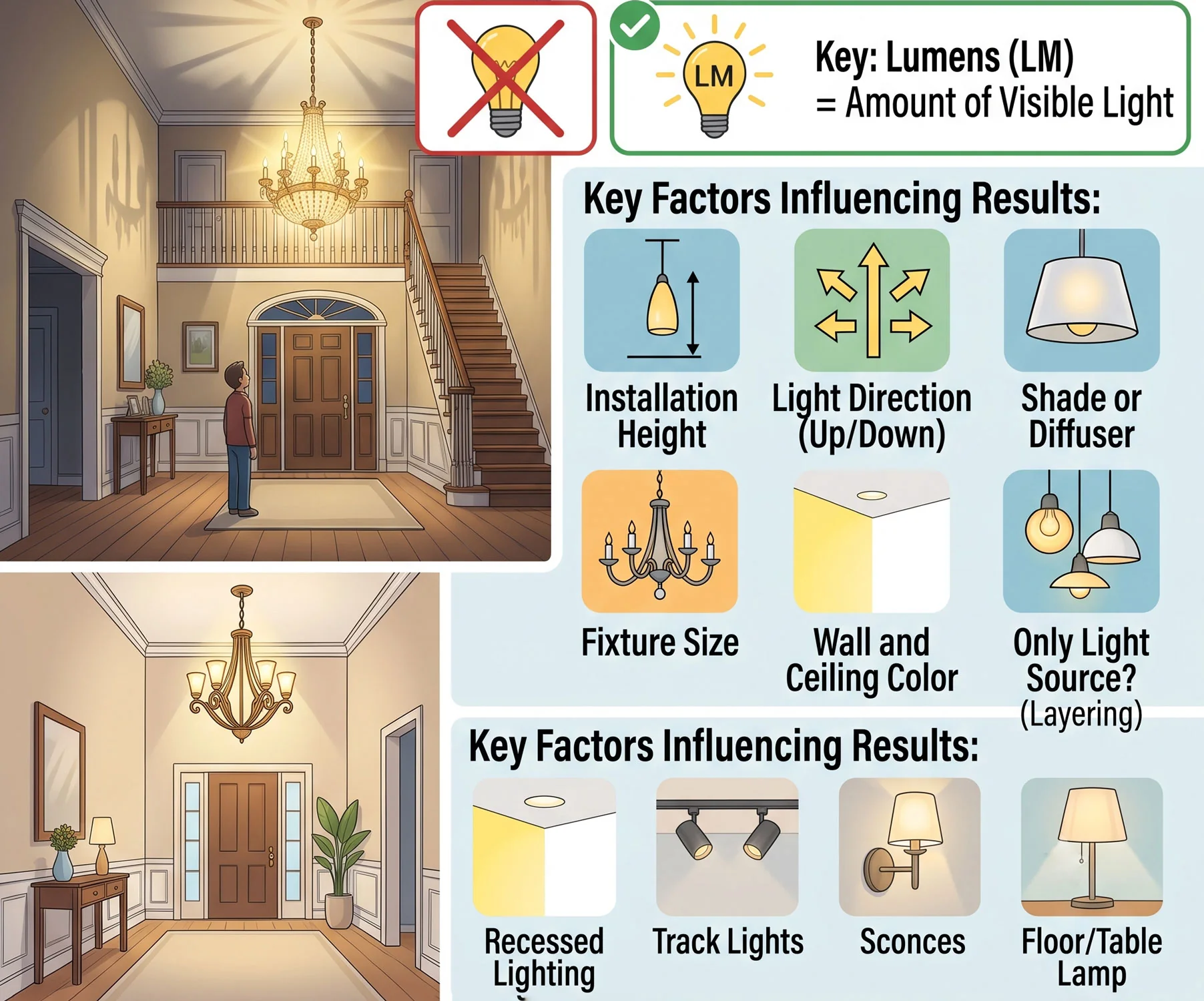
Many homeowners assume that a high ceiling automatically requires a chandelier with a higher wattage. But wattage measures energy use, not visible brightness. The more useful number is lumens.
A tall room does not always need an extremely bright chandelier. It needs the right combination of scale, light direction, and output.
In larger rooms, the chandelier should usually be supported by other lighting layers (sconces, recessed lighting, lamps) to prevent the ceiling from looking bright while the seating areas remain dim.
Integrated LED Works Well for Continuous Light
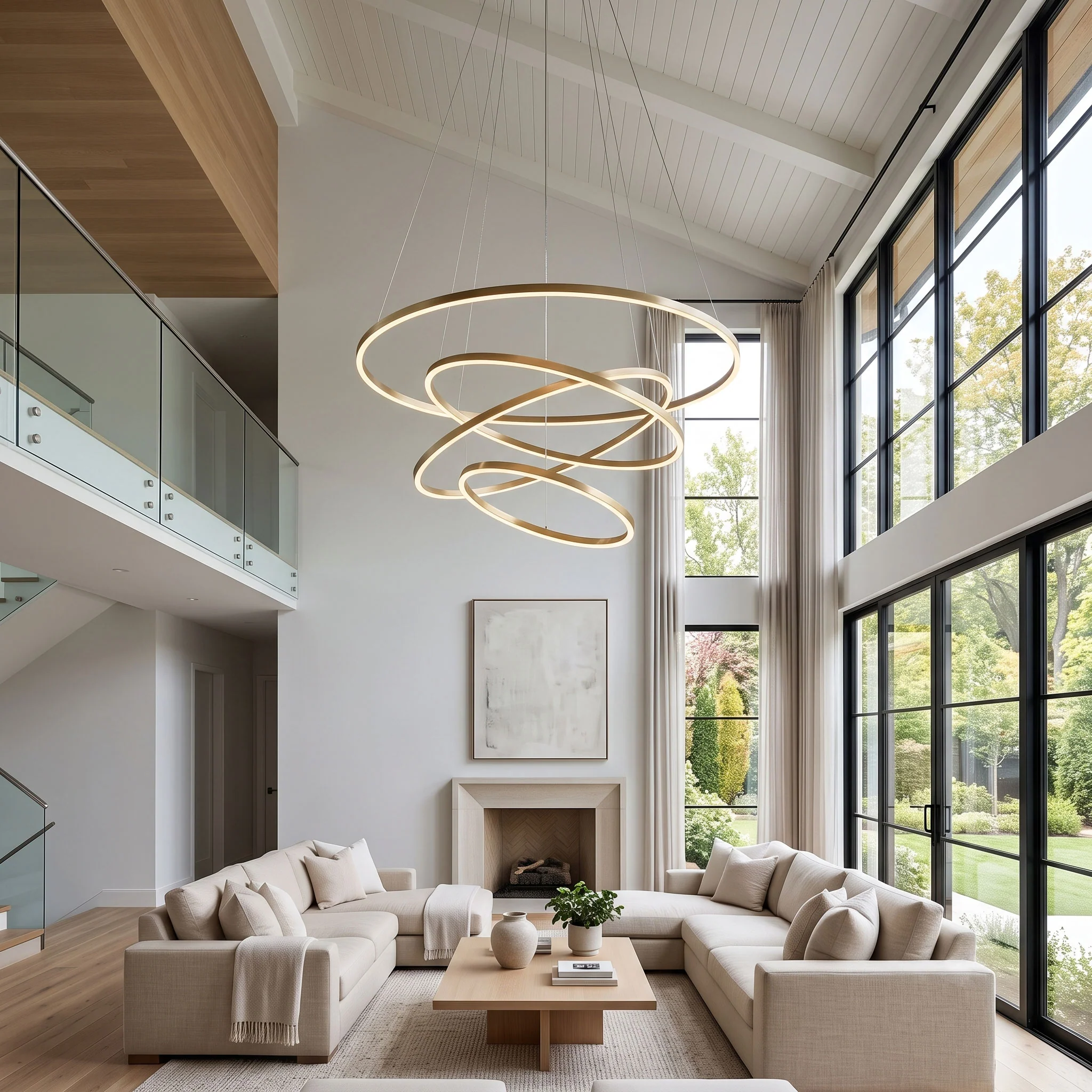
One of the strongest advantages of integrated LED lighting is that the light source can follow the shape of the fixture. A ring chandelier produces an even circle; a linear chandelier creates a continuous glowing line.
This architectural lighting feels clean, modern, and visually complete from all angles (first floor, staircase, upper landing).
If your home has a modern, minimalist, or contemporary style, an integrated LED chandelier may be the more natural choice.
Bulb Chandeliers Create Decorative Depth
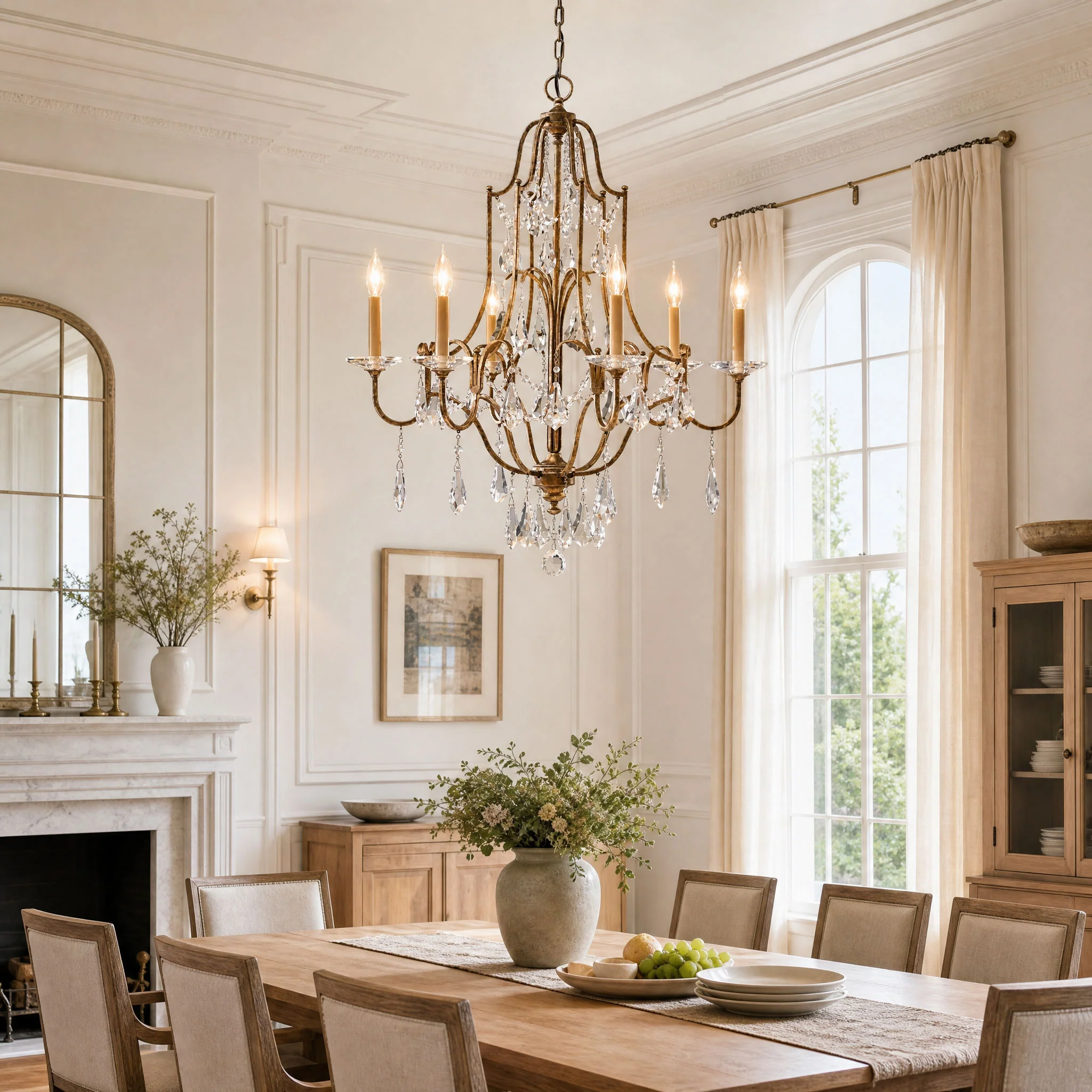
Bulb chandeliers create individual points of light instead of one continuous line. The effect is less seamless, but it often feels richer, warmer, and more decorative.
In many designs, the bulbs are part of the chandelier’s visual identity (e.g., candle-style or crystal fixtures).
In a high-ceiling room, multiple visible bulbs can give a large chandelier more depth and presence. If you want a traditional decorative centerpiece, a bulb chandelier is better.
Color Temperature Tweaks
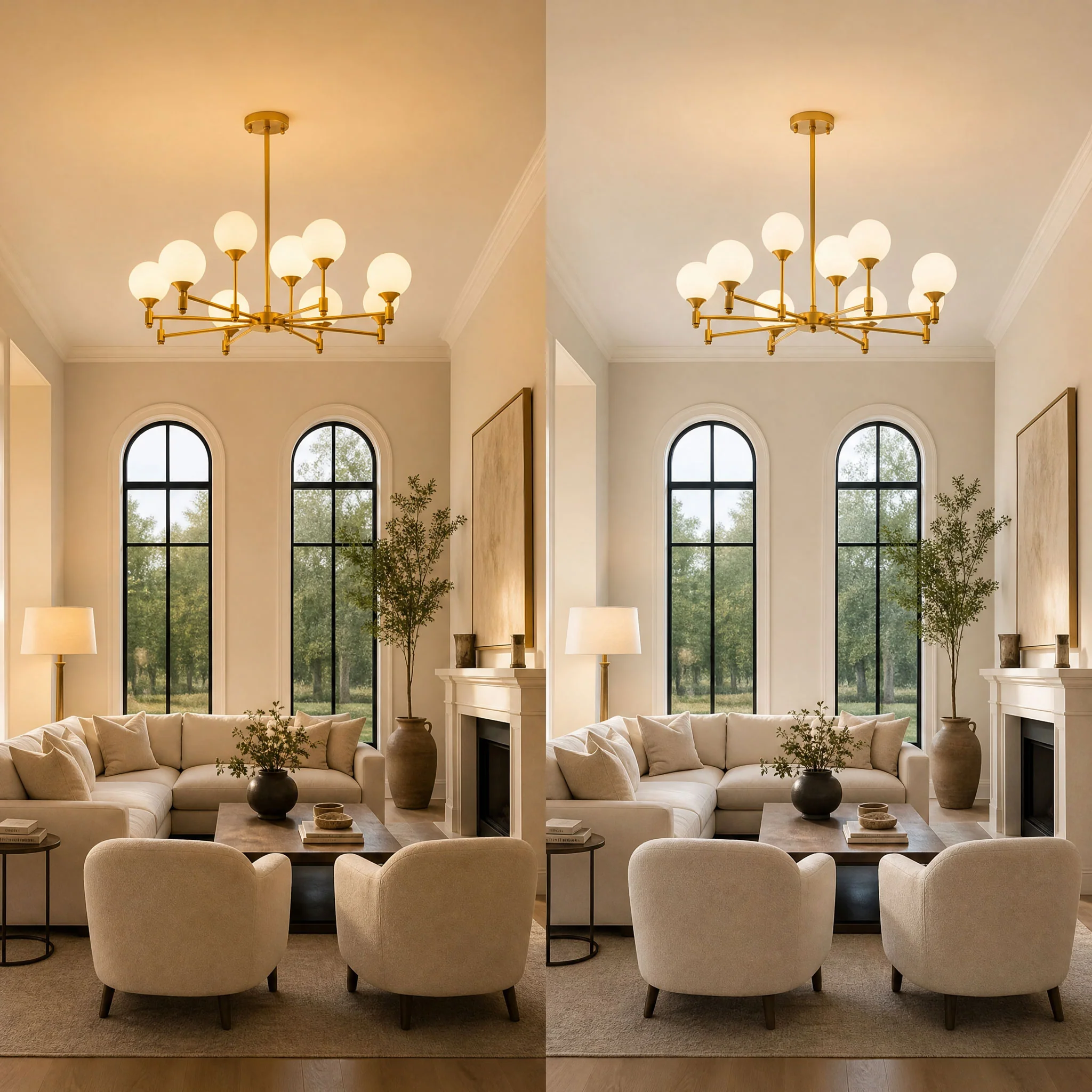
Many American homeowners prefer lighting between 2700K and 3000K (warm) in living areas. With a bulb chandelier, changing this is easy. If the light feels too white, simply replace the bulbs.
Most integrated LED chandeliers have a fixed color temperature unless they include tunable-white lighting.
Before ordering an integrated LED chandelier, confirm the actual color temperature. Once installed high up, changing it may not be simple.
Dimming Compatibility Should Be Confirmed
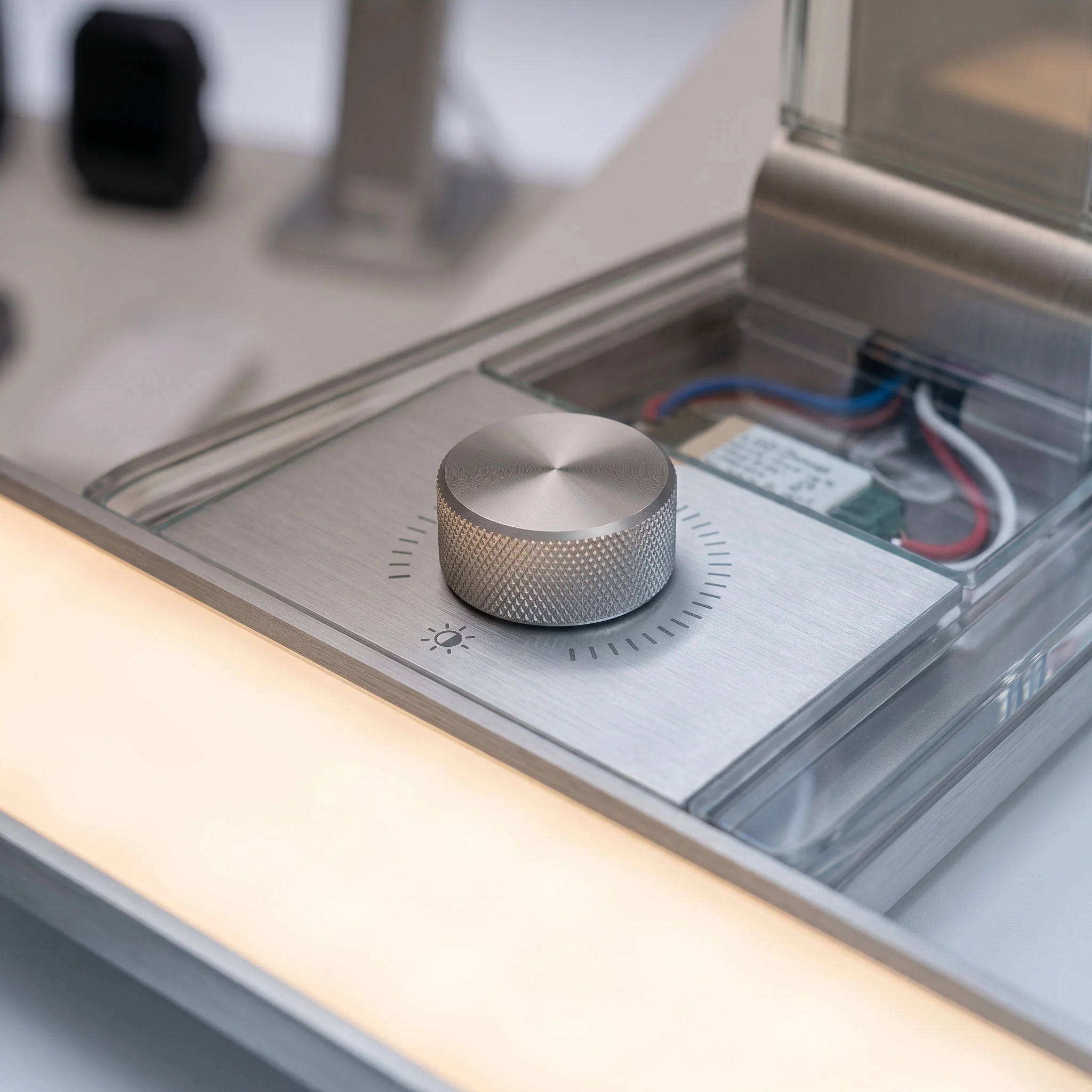
Dimming is especially useful in high-ceiling spaces because the same fixture may serve different purposes (bright for cleaning, soft for dinner).
If the chandelier, bulbs, driver, and wall dimmer are not compatible, you may experience flickering, buzzing, or delayed startup.
For integrated LED, confirm which dimming system the driver supports (TRIAC, ELV, 0-10V). For bulb chandeliers, ensure the exact bulb matches the wall dimmer type.
Integrated Is Not Automatically More Efficient
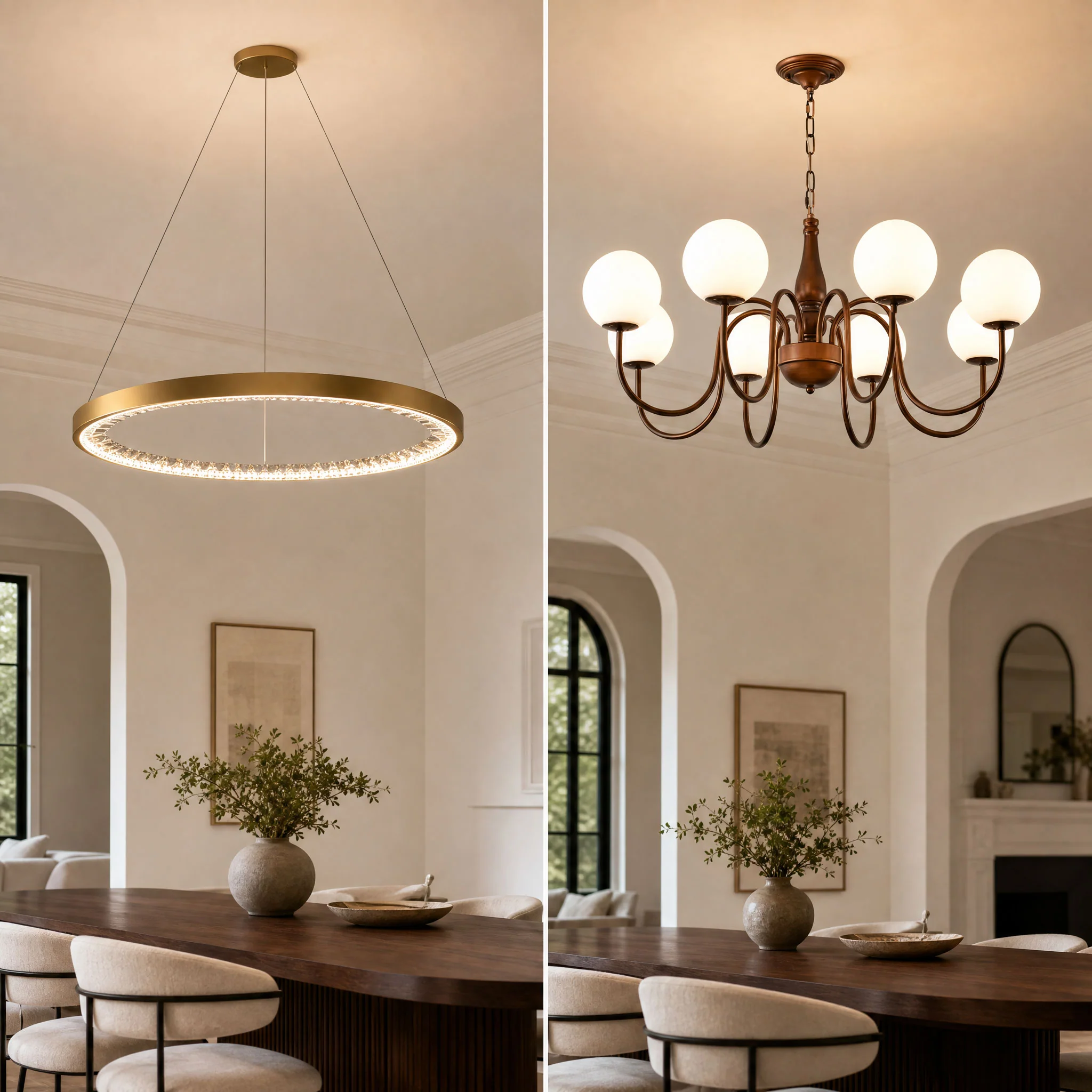
Many assume an integrated LED chandelier will always use less energy. That is not necessarily true.
A traditional chandelier fitted with efficient LED bulbs can also use very little electricity. Integrated systems can be highly efficient, but the word “integrated” alone doesn’t guarantee it.
Compare the actual specifications (total fixture wattage vs total lumen output) instead of judging by the light source type alone.
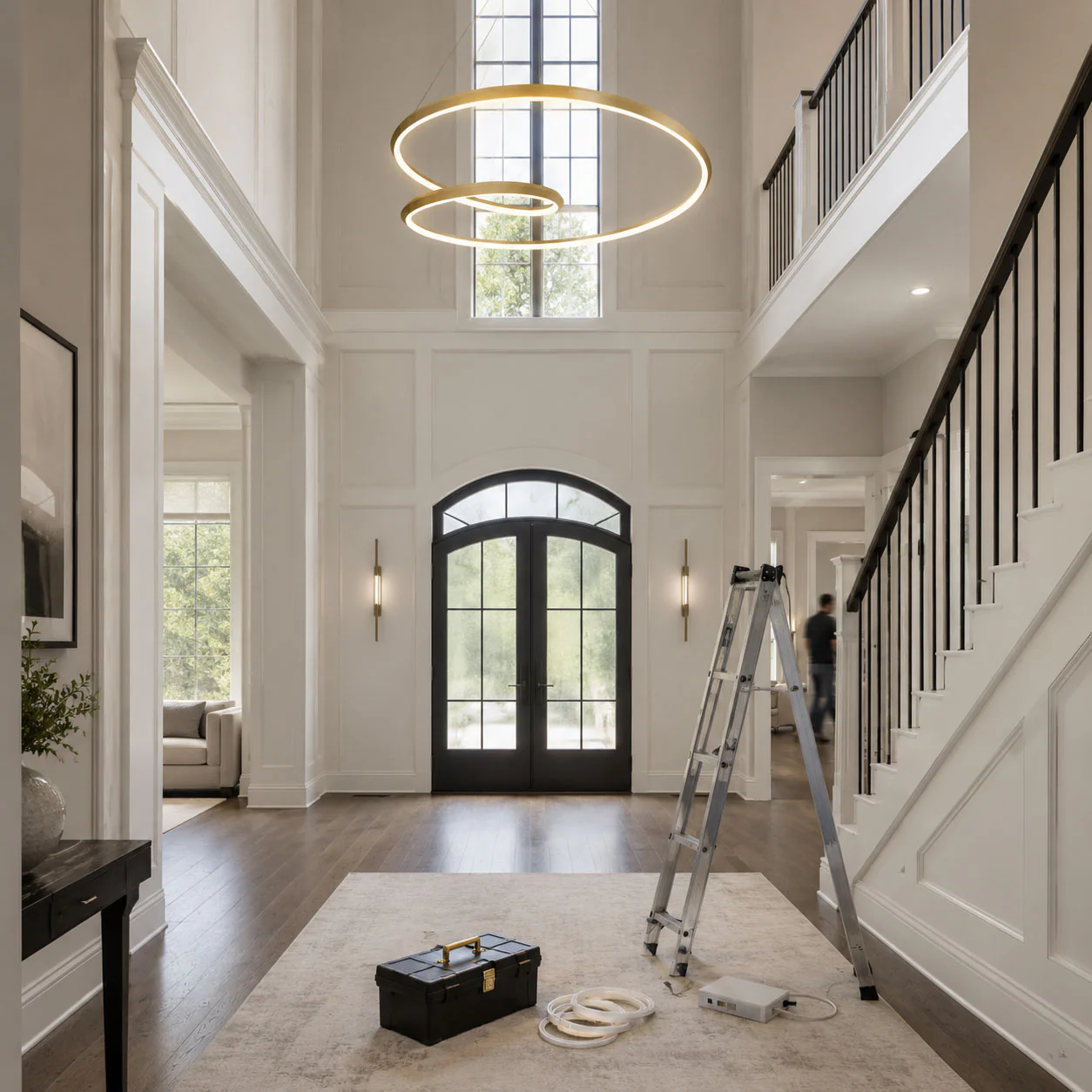
Think About When Something Fails
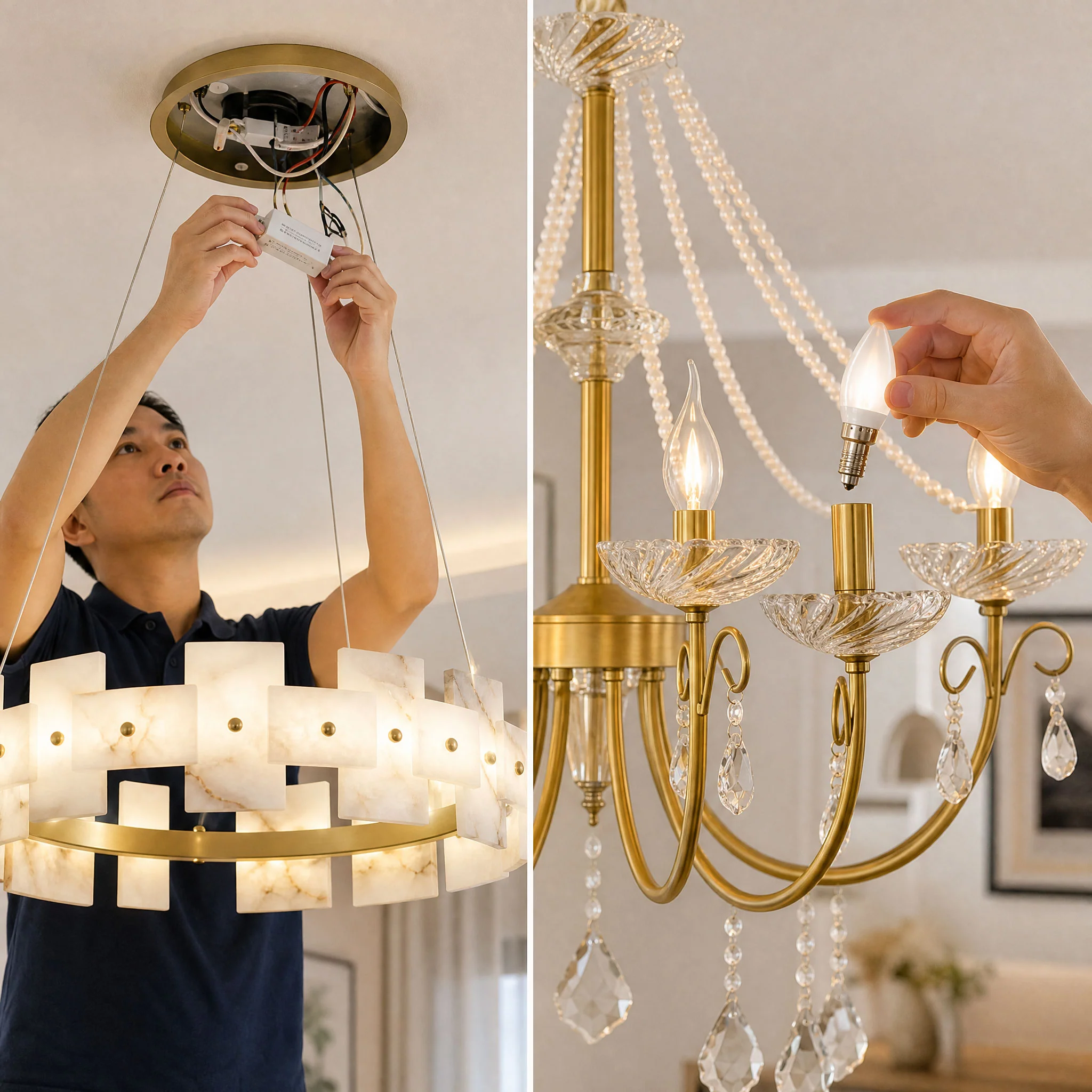
With a bulb chandelier, a problem is usually easy to identify: if one bulb goes out, replace it.
Integrated LED failures can be less straightforward. You may see part of the fixture become dim, a shift in light color, or a complete loss of power due to driver failure.
For high ceilings, details such as driver location, replacement-part availability, and whether the fixture must be removed can have a major effect on future maintenance.
Compare Long-Term Cost, Not Just Price
The price of an integrated LED usually includes all components (driver, modules). A bulb chandelier may appear less expensive at first, but a full set of quality dimmable LED bulbs adds to the final cost.
For a high ceiling, long-term ownership may also include professional bulb replacement, scaffolding rental, or lift installation.
If a multi-bulb chandelier is mounted very high, it often makes sense to replace all the bulbs at once when several begin to age.
Which Type Is Better for Different Spaces?
Two-Story Foyer
Hardest to reach. Choose integrated LED for fewer bulb changes, or a massive crystal bulb fixture for sheer luxury impact.
Vaulted Living Room
Scale matters. Integrated designs fit modern spaces (rings/lines); bulb fixtures fit warm, traditional rooms.
Dining Room
Integrated fixtures provide a clean modern glow, while bulb chandeliers offer a softer, layered dinner atmosphere.
Stairwell
Vertical integrated LEDs utilize height beautifully. Ensure the driver doesn’t require removing the entire unit to fix.
Questions to Ask Before Buying
- 1. What is the total lumen output?
- 2. What is the color temperature?
- 3. Is the chandelier dimmable?
- 4. Which dimmer type is compatible?
- 5. Can the driver be replaced?
- 6. Are replacement modules available?
- 7. Which socket type does it use?
- 8. Are the bulbs included?
- 9. How long is the warranty?
- 10. How will it be cleaned/serviced?
- 11. Adjustable cord/downrod length?
- 12. Sloped ceiling compatible?
- 13. Properly scaled for the room?
- 14. Will the room need extra lighting?
Final Verdict: The real choice is about which ownership experience matters more to you: Less routine maintenance (Integrated LED) or easier long-term repair (Bulb Chandelier). Think about how it will be maintained 5 or 10 years from now.
Find the Right Chandelier at Noolight
Whether you prefer a modern integrated LED chandelier or a classic fixture with replaceable bulbs, explore our collection and find a design that works beautifully in your space.